Construction Industry · OPSEC Briefing

You Build in
Public.
Your Data Doesn't Have To.

The construction industry loses more competitive intelligence than any other sector — and most firms never know it happened. Every blueprint you email. Every survey photo you share. Every invoice you PDF and send. The data inside those files is a complete intelligence package for anyone who wants it.

$8.5B
lost annually to bid fraud
68%
of firms share files with metadata intact
14 days
average time to detect a data leak

▼ scroll to read

Construction Firms Are Intelligence Factories
That Don't Know It.

Every phase of a construction project generates sensitive data — and almost all of it flows through email, shared drives, and PDF attachments with zero protection. This is not a technology failure. It's a blind spot that's been in the industry for 30 years.

📐
Blueprints Are Briefings
A CAD export isn't just a drawing. It contains the drafter's name, employee ID, internal folder structure, software version, creation timestamp, and in most cases — GPS coordinates from site surveys. Handing a competitor your blueprint is handing them your entire project intelligence picture.
📸
Site Photos Are Maps
Every photo taken on a job site with a smartphone contains EXIF GPS data pinpointing the exact location. When you send progress photos to clients, subcontractors, or insurers, you're attaching precise coordinates, device model, and time of capture to every image. No extraction tool required — it's in the file.
📄
Invoices Tell Stories
PDF invoices from subcontractors carry version histories, author names, and edit timestamps. A fraudulent invoice that's been altered carries the original author's fingerprint alongside the edit. That's evidence — but only if you know where to look. And only if you look before it's paid.
1 in 3
Construction firms targeted by bid manipulation annually
Source: Construction Industry Alliance, 2024
94%
of JPEG site photos contain embedded GPS coordinates
Source: EXIF Analysis Studies, 2023
$340K
Median cost of a single construction data breach
Source: IBM Cost of Data Breach Report, 2024
78%
Of subcontractor invoice fraud goes undetected for 90+ days
Source: ACFE Report to the Nations, 2024
Construction Threat Exposure Index — Likelihood × Impact
Blueprint Metadata Leak
93%
GPS-Tagged Site Photography
88%
Subcontractor Invoice Fraud
76%
Procurement Bid Manipulation
71%
Remote Access / Network Intrusion
65%
Environmental Compliance Tampering
48%

The Blueprint That Briefed the Competition

Your CAD drawings are the most intelligence-rich documents your firm produces. Before they ever reach a client, they've already disclosed everything a competitor needs to know — and most firms don't even know metadata exists.

Architectural blueprints and technical drawings on a desk

The Invisible Briefing

01 — BLUEPRINT METADATA

Every Export Is a Confession

A regional contractor submitted pre-tender drawings for a $2.4M government infrastructure contract. Standard process: attach to email, send to client. What they didn't know was that each PDF exported from their CAD system carried a metadata payload — the drafter's full name and employee ID, the internal project folder path (which named the client), GPS coordinates from a site survey, and software version data revealing their entire toolchain.

EXPOSED: Competitor running basic metadata extraction owns the intelligence picture — knows the client, the team, the tools, and the site location. The bid is lost before it's submitted.
STRIP DEPLOYED: Zero-metadata exports on every document leaving the firm. GPS stripped. Authorship removed. File paths sanitized. The drawing contains what you intended to share — nothing else.
RESULT: The tender process becomes a competition on merit. Not a competition over who has better metadata extraction tools.
"You spent months designing those plans. Don't let the file tell the story before you do."
Metadata Anatomy — What's Inside a Typical Construction PDF
🗂 Site_Plans_Revised_v4_FINAL.pdf
Author:Marcus D. Reynolds, CAD-7429
Created:2026-02-14 09:43:11
Modified:2026-02-19 16:22:54
Software:AutoCAD 2026.1.2 / Win11
Source Path:/Projects/Clients/Harbour_Gov_Phase2/
GPS Lat:18.0179° N
GPS Lon:76.8099° W
Company:RD Construction Ltd.
Revision:4 (visible in doc)
👤
Employee Identity + ID
Gives a social engineer a named target. Employee ID maps to internal systems if intercepted.
📁
Internal Folder Path
Names the client explicitly. "Harbour_Gov_Phase2" tells a competitor exactly who the contract is with.
📍
GPS Coordinates
Precise site location. Combined with Google Maps, a competitor can survey your site before your bid is reviewed.
🛠
Software Fingerprint
Reveals your toolchain. Enables targeted phishing with fake software update notifications.


The Photo That Mapped Your Site

Every iPhone, Android, and drone camera embeds GPS coordinates in every photo it takes. When that progress photo leaves your site, it carries a precise map of where you are — and who took it, when, and on what device.

Construction site aerial view with cranes and active build

EXIF Data Exposure

02 — GPS-TAGGED PHOTOGRAPHY

Your Progress Photos Are Real-Time Intelligence

A project manager sends 14 progress photos to the client via email. Standard. Expected. Each photo was taken on a company iPhone. Each photo contains GPS coordinates accurate to 3 meters, the device serial number, the time of capture, and the photographer's Apple ID account name embedded in the EXIF data. This information reaches the client — but it also reaches anyone who intercepts the email, anyone the client forwards to, and any third-party system the file passes through.

EXPOSED: Exact site location. Active work hours. Team device inventory. Competitive intelligence about project progress that could be used to undercut your next bid on the same site.
STRIP DEPLOYED: EXIF GPS stripped before the photo leaves the device. Image quality preserved. Professional delivery. Zero location intelligence embedded.
RESULT: Clients receive clean progress documentation. Subcontractors get usable images. No one gets a map of your operations.
Live EXIF Simulation — What Leaves Your Site With Every Photo
📸 Site Entry · 09:14
📸 Foundation · 11:02
📸 Framing · 14:37
📸 Roof Deck · 16:15
EXIF GPS · LIVE RECONSTRUCTION
18.0179° N, 76.8099° W
Embedded GPS Coordinates
iPhone 16 Pro · 4K
Device + Camera Model
±3m accuracy
Location Precision in JPEG EXIF

The Invoice That Wasn't What It Looked Like

Subcontractor invoice fraud costs the construction industry billions annually. The fraud isn't just in the numbers — it's in the metadata. A modified invoice carries the original author's fingerprint alongside the fraudulent edit. If you know where to look.

Business documents, contracts and invoices on desk

Invoice Metadata Forensics

03 — SUBCONTRACTOR FRAUD

The Alteration Left a Fingerprint

A general contractor receives a PDF invoice from a concrete subcontractor for $84,000. The invoice looks professional. The letterhead matches. The line items are plausible. But the document metadata tells a different story: the original was created by "J. Williams" in the subcontractor's office. The version on file was last modified 48 hours later — by a username that doesn't match the subcontractor's domain. The bank account in the modified version routes to a third party.

EXPOSED: $84,000 wired to a fraudulent account. Bank fraud recovery rate in construction: less than 12%. The subcontractor's legitimate invoice was intercepted, modified, and re-sent. Classic Business Email Compromise.
SEAL DEPLOYED: Cryptographic hash registered on the original invoice at point of receipt. Any modification — even one byte — breaks the hash. Seal flags the tampered document before payment is authorized.
RESULT: The modified invoice is flagged at verification. Finance is alerted. Payment is held. The fraud is stopped before the wire clears.
"The invoice looked right. The metadata didn't. Seal knows the difference."
Timeline — 72-Hour Invoice Fraud Attack
DAY 1 · 08:44
Legitimate invoice sent
Subcontractor emails invoice-INV-2044.pdf for $84,000 to the general contractor's accounts team. Email is intercepted via BEC compromise. GC never receives the original.
DAY 1 · 11:22
Invoice modified
Attacker opens the PDF, edits the bank account number, updates the routing code, and re-saves with a slightly different filename. EXIF modification timestamp is now 2 hours after creation. The original author's name remains in the metadata.
DAY 2 · 09:01
Fraudulent invoice delivered
Modified invoice forwarded from a spoofed sender address. AP team sees a familiar name, a familiar amount. Schedules for payment. No verification performed.
DAY 2 · 09:01 — WITH SEAL
Hash mismatch detected
Seal flags the document immediately. Cryptographic hash doesn't match the registered original. Finance team is alerted. Payment is held pending verification. Fraud stopped.

The Bid That Was Already Answered

Procurement kickbacks and bid rigging cost the global construction sector an estimated $4.5 trillion over the last decade. The mechanism is often embarrassingly simple: someone inside the process with access to competing bids. Or a document that leaked before submission.

Construction workers reviewing plans at a job site

Procurement Intelligence Exposure

04 — BID MANIPULATION

The Competition Knew Your Number

A mid-size contractor submitted a competitive bid of $6.2M for a commercial development. They lost — to a competitor who came in at $6.15M. Third time in 18 months they'd lost by a margin under 2%. Their bid documents had been assembled on a shared network drive with loose permissions. The folder was accessible from a compromised vendor laptop. APC would have flagged the outbound file access event the night before submission.

EXPOSED: Bid figure, methodology, and subcontractor pricing visible to anyone on the network with read access. No logging. No alerting. No audit trail.
APC DEPLOYED: Every file access event on bid documents logged. Anomalous off-hours access from unknown device triggers alert. Seal's integrity verification detects any unauthorized copy or transmission.
RESULT: The off-hours access event is flagged at 2:34 AM — two days before submission. The document is placed in restricted access. The bid proceeds with confidentiality intact.
APC Network Monitoring — Bid Document Exfiltration Scenario
Network Drive
/bids/2026/Q1
Document source
Vendor Laptop
192.168.1.44
Compromised device
⚡ APC ALERT TRIGGERED
External IP
194.87.xx.xx
Unknown destination
APC Console
Alert Active
Exfil blocked · Logged

The Network That Was Open for Business

Construction site networks are among the most permissive in any industry. Temporary Wi-Fi for subcontractors. IoT sensors. Drones. Site cameras. Every device is a potential entry point — and most firms have no visibility into what's connected.

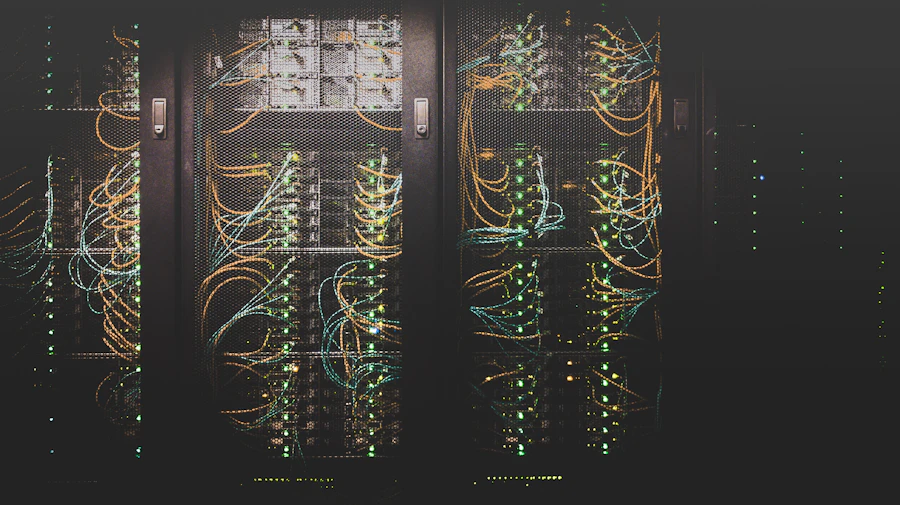
Network server room with cables and equipment

Network Visibility Gap

05 — NETWORK INTRUSION

You Gave 40 Subcontractors Wi-Fi Passwords

A major commercial contractor managed 12 active projects simultaneously, each with a project site Wi-Fi network. Password policy: one shared password per site, changed quarterly. The office network, project management software, and BIM servers were all accessible from the site network via VPN. The site network had no monitoring. No packet inspection. No anomaly detection. A subcontractor's laptop was running a keylogger — and the firm didn't know for 6 months.

EXPOSED: 6 months of credentials. Email access. BIM server access. Active bid data for 12 concurrent projects. The keylogger exfiltrated 2.3GB of data before discovery — during a routine IT audit, not an APC alert.
APC DEPLOYED: Every packet leaving site networks is logged and profiled. Anomalous upload volumes, unknown destinations, and off-hours activity are flagged within minutes of occurrence — not months later.
RESULT: The keylogger's exfiltration attempt triggers an APC alert at hour one, not month six. The compromised device is isolated. The firm retains control of its bid pipeline.
"You can't protect what you can't see. APC makes the invisible visible — before it's too late."
Cost Impact — Network Breach Scenarios vs. APC Deployment
BIM/BIM Data Breach (undetected 6mo)Forensic investigation, IP loss, rebidding
$1.2M+
Invoice Fraud (3 invoices, undetected)Wire fraud, legal recovery costs
$240K
Blueprint Leak (single tender)Lost contract, reputational damage
$80K+
Regulatory Fine (data breach notification)GDPR/local data law non-compliance
$50K–$500K
BlackBox Full Suite (annual)Strip + Block + Seal + APC + MetaBlock
< $360/yr

The Compliance Report Someone Didn't Want Verified

Environmental compliance documentation is among the most legally sensitive material a construction firm produces. When that documentation is tampered with — or when you can't prove it wasn't — the liability is yours, regardless of who did it.

Aerial drone survey of large infrastructure construction site

Compliance Document Integrity

06 — ENVIRONMENTAL COMPLIANCE

The Report Said One Thing. The Regulator Found Another.

An infrastructure contractor submitted environmental impact reports to the relevant authority as part of a highway development. The reports were accurate at submission. Between submission and the regulatory audit, a document was accessed and modified — not by the contractor, but by a subcontractor whose project manager had share access. The modification removed a soil contamination finding. The contractor's name was on the cover page. The liability was theirs.

EXPOSED: Regulatory liability, potential license suspension, and criminal charges under environmental law — for a modification the contractor didn't make and couldn't prove they didn't make. Without a document integrity record, there's no defense.
SEAL DEPLOYED: Cryptographic manifest created at the point of report finalization. Every copy distributed has a verifiable signature. Any modification — by anyone, at any point — breaks the chain. The contractor can prove exactly what was submitted and when.
RESULT: Audit review reveals the tampered copy doesn't match the Seal-verified original. The contractor provides timestamped proof of document integrity. Liability is shifted to the modifying party. License intact.
"Integrity isn't just about doing the right thing. It's about being able to prove you did."
"The construction industry doesn't have a technology problem. It has a visibility problem. BlackBox is how you get eyes on everything you're already sending."
— TYRONE A. CUNNINGHAM · FOUNDER, LUMINOUS.WORKS

The BlackBox Construction Stack

Six threats. One suite. Every tool in BlackBox was built for exactly the scenarios above — not as an enterprise afterthought, but as a precision instrument for organizations that move documents, money, and intelligence daily.

BlackStrip
Metadata Removal
  • Strips GPS, authorship, file paths from PDFs, CAD exports, JPEGs
  • Batch process entire project folders before external sharing
  • Preserves document quality — zero visual impact
  • Covers Threats 01, 02
BlackSeal
Document Integrity
  • Cryptographic hash on every document at creation
  • Detect any modification — even one byte — instantly
  • Timestamped chain of custody for regulatory audit
  • Covers Threats 03, 06
BlackAPC
Network Intelligence
  • Packet-level monitoring on every site and office network
  • Anomaly detection: off-hours access, unknown devices, bulk exports
  • Real-time alerts with full session logs
  • Covers Threats 04, 05
BlackBlock
Access Control
  • Lock sensitive bid documents behind behavioral access controls
  • Granular permission sets per project, per subcontractor
  • Audit log of every document access event
BlackGuard
Social Engineering Defense
  • Monitor and clean social media footprint of project teams
  • Remove exposed employee data that enables targeted phishing
  • Protect field teams from social engineering via LinkedIn, Facebook
Full Suite Bundle
Complete Coverage · $29.99/mo
  • All five tools. One license. One flat rate.
  • Saves $55+/mo versus individual tool pricing
  • Priority support + future tool updates included
  • Designed for firms that can't afford a $340K breach

Ready to Lock It Down?

Stop Leaking.
Start Winning.

Your competitors are already using every advantage they can get. The ones who win tenders consistently aren't just better engineers — they're better at protecting their process. BlackBox is how you match them.